My research explores the intersection of international history, military strategy, diplomacy, intelligence, and geopolitical competition, with particular emphasis on the Mediterranean, Europe, and the Middle East during the twentieth century.
A central theme of my scholarship is the relationship between political ambitions, strategic decision-making, and military operations. Through archival research, I investigate how states and non-state actors pursue their objectives through conventional warfare, diplomatic negotiations, intelligence activities, clandestine networks, and indirect forms of confrontation.
My earlier research examined Fascist Italy's foreign policy and imperial ambitions, particularly its rivalry with Great Britain in the Middle East during the interwar period. This work explored the ways diplomacy, commercial competition, military assistance, propaganda, and covert activities shaped international relations beyond the principal European theatres.
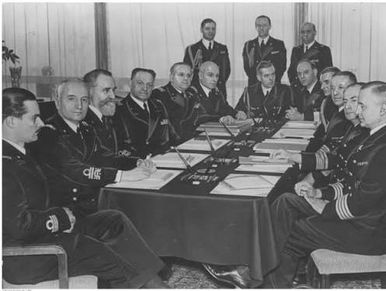
A second major strand of my research investigates Axis military cooperation during the Second World War, especially German–Italian naval operations and military diplomacy. My publications address the Italian naval contribution to operations in the Black Sea and Baltic regions, submarine cooperation in the Atlantic, and strategic coordination between Germany and Italy.
More recently, I have expanded my research into the origins of the Arab–Israeli conflict, focusing on the clandestine international dimensions of the 1948 war. My studies investigate arms procurement, intelligence networks, sabotage operations, and the involvement of European and Latin American actors in the military and political developments surrounding the establishment of Israel.
My scholarship also examines the historical dynamics of insurgency, counterinsurgency, and military occupation, including the relationship between irregular warfare and coercive responses in occupied territories.
Across these research areas, I seek to illuminate neglected historical episodes, reassess established interpretations, and contribute to a deeper understanding of the relationship between diplomacy, intelligence, military power, and international security.
My research examines the relationship between diplomacy, military power, intelligence, and international competition, with particular emphasis on Europe, the Mediterranean, and the Middle East during the twentieth century. Drawing extensively on archival sources, my scholarship explores both conventional and clandestine dimensions of conflict, from imperial rivalry and wartime strategy to intelligence operations and international arms procurement networks.

"Disrupting Arab Arms: Israel's Secret Front in Italy, 1948-1949," Intelligence and National Security (2026). Examines Israeli clandestine operations in Italy during 1948–1949, focusing on maritime sabotage, industrial disruption, and efforts to obstruct Arab arms procurement.

"Arming a Nation: Italy's Role in Israel's Clandestine Arms Pipeline, 1947-1949," Israel Affairs (2026), 1-21. Reconstructs Italy's role in the clandestine arms procurement, training, and logistical networks supporting Israel during the 1948 Arab–Israeli War.

With Spyridon Plakoudas, "Asymmetric Escalation in Occupied Greece: Insurgency, Repression, and the Failure of Italian Counter-Insurgency, 1941-1943," War in History (2026). Explores how insurgency and increasingly coercive Italian counterinsurgency measures fuelled escalating violence and undermined occupation authority in Greece between 1941 and 1943.

"British Responses to Italian Non-Belligerence, September 1939 to June 1940," The English Historical Review, Vol. 138, No. 592 (2023), 566-90. Reassesses British diplomatic and strategic efforts to prevent Italy's entry into the Second World War between September 1939 and June 1940.

With Joel Hayward, "The 1941 Merano Conference: Building a Relationship through Military Diplomacy," Diplomacy & Statecraft, Vol. 35, No. 2 (2024), 262-83. Analyses German–Italian naval diplomacy at the 1941 Merano Conference and its significance for cooperation and strategic coordination between the Axis partners.

"Effective Naval Diplomacy: German-Italian Submarine Cooperation in the Atlantic, 1939-1941," War in History, Vol. 32, No. 3 (2025), 245-60. Examines German–Italian submarine cooperation in the Atlantic, demonstrating the importance of military diplomacy in overcoming strategic and operational differences.

Alongside my historical scholarship, I have contributed analytical articles and policy papers examining international relations and security developments, particularly in the Middle East and Mediterranean. These publications address regional diplomacy, nuclear proliferation, interstate competition, and the evolving strategic relationships between regional and international actors.